Thinking about a house renovation? Then the first thing you should find out is when your house was built. The construction period can be decisive in determining whether there is asbestos in the building you want to renovate. In a house built between 1960 and 1990, you should expect that some parts of it are very likely to contain asbestos. During a house renovation, you should therefore pay particular attention to floor coverings, roof panels and insulation. To be on the safe side, you should always bring in an expert when renovating your house.
Hire an expert
Experts have a trained eye for asbestos and can give you the best possible advice and support, because with asbestos in particular, handling and disposal need careful attention. Although asbestos has been banned since the 1990s, this problem material is still present in many old houses and flats and often only comes to light during a renovation. At umbaumanager.ch, we also have a team of experts who can professionally assess whether asbestos has been used in your home. Simply send a no-obligation enquiry to our house renovation company and we will soon find out whether asbestos is an issue within your four walls.
What is asbestos?
Was your house built between 1960 and 1990? Then you should definitely bear this in mind when planning your house renovation. Asbestos could be present in some parts of the house. As long as the asbestos is firmly built in, it poses no danger. Things become critical when you renovate and break through or demolish walls. Removing old floors during a house renovation can also expose asbestos. If asbestos particles are released during the renovation, inhaling them can damage your health.
As soon as you damage or remove Eternit (fibre cement) panels, screed or insulation during a house renovation, you expose yourself to the risk of developing cancer. An expert has a trained eye for what matters when renovating a house, and detecting asbestos is no exception.
Is asbestos dangerous when it is worked on or during a renovation?
If you are considering renovating your house, have a specialist take a look at the Eternit panels, floor coverings and screed. Inhaling asbestos particles can damage your lungs. The particles are heavy and settle in your lungs. The long-term effects of asbestos are serious and life-threatening. Over the years, asbestos can lead to asthma, persistent shortness of breath and, in the worst case, lung cancer. So it makes good sense to seek expert advice when renovating your house, doesn’t it?
If asbestos is found in your house, this reduces its sale price. That makes a house renovation a genuine financial investment. Once you have rid the house of asbestos, its value increases at the same time. Professional removal of asbestos in particular can push up the value of the property even further.
Asbestos already in place
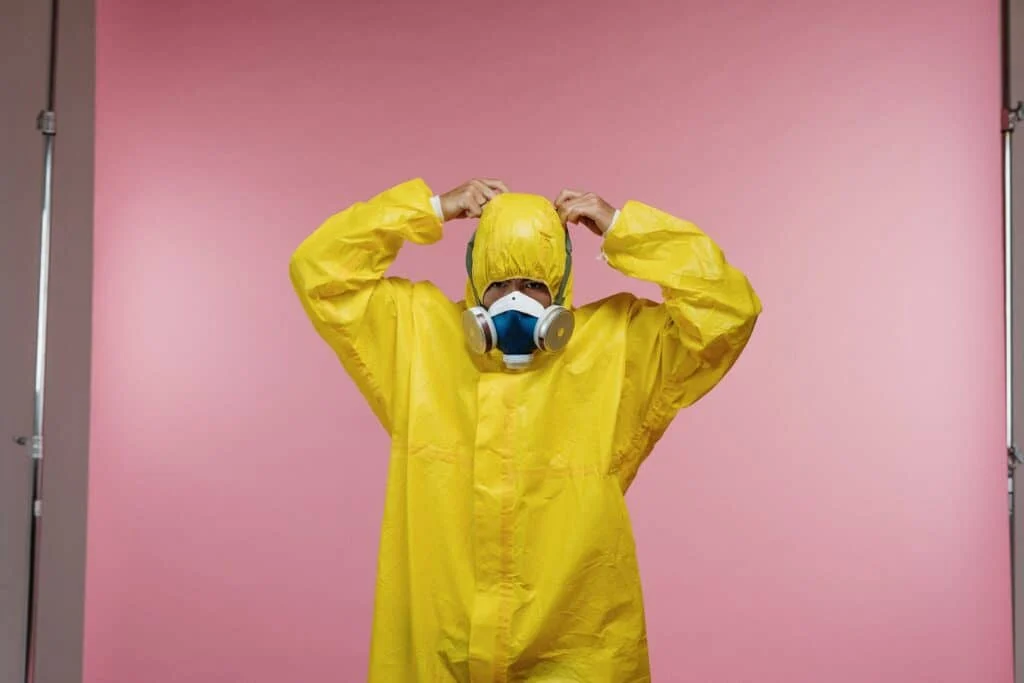
If it turns out that asbestos was used in your house, its mere presence in the building is not yet a problem. The problem only arises when you decide to renovate and start the work. It is the intensive working of the material that causes the real problem. If you carry out the renovation without suitable protective clothing in particular, you are putting your health at enormous risk. Do not be tempted to remove asbestos yourself, simply getting stuck in and tearing down walls. The risk of damaging your health is high. Leave the proper removal to the professionals. The experts also know exactly what protective clothing is needed.
How dust is created
The dust produced when asbestos is damaged is so fine that it cannot be seen with the naked eye. This dust enters the lungs when you breathe. That is why suitable protective masks that filter the air should always be worn during a renovation. Make sure you use the right filters, though: not every filter can keep out asbestos. Professionals know exactly which protective masks should be used for the renovation. Without suitable protective measures, you should avoid damaging asbestos as far as possible. Stop drilling into walls where you suspect this hazardous material. Bring in a specialist if you suspect that there could be asbestos in your house.
What forms of asbestos are found in buildings?
Want to start your house renovation? Have you discovered materials containing asbestos in the floors or insulation? Then stop for now and consult an expert. Asbestos is not all the same. It depends on whether it is firmly bound, weakly bound or loosely bound.
Firmly bound asbestos can usually remain in the house; there is no great need to remove it. This firmly bound material poses hardly any health risk, provided it is not damaged. If you discover firmly bound asbestos components during your house renovation, leave them alone. To be on the safe side, however, get a specialist’s opinion.
Weakly bound asbestos
With weakly bound asbestos, there is a high risk that fibres and particles will be released. You can often find the weakly bound form in floor adhesives, pipe lagging and window putty. During your renovation, simply have an expert look at the danger spots. Professionals can tell immediately whether weakly bound asbestos-containing materials are involved. Asbestos may also have been used in the tile adhesive of your old bathroom, so removing the old tiles can release asbestos.
In the past, loosely bound asbestos was found mainly in filler compounds. However, investigations have shown that asbestos-containing materials were also used in plastering houses, as well as around door frames and in heating niches.
Have an asbestos survey carried out
So that you do not put yourself at risk during your house renovation, you should have an asbestos survey carried out beforehand. Bring a specialist into your home and have your property inspected for asbestos. This survey is not only recommended for a complete renovation. If your house was built between 1960 and 1990, you should always keep asbestos in mind, even when replacing your heating system. The specialist will take samples from the relevant areas and send them off for testing. As soon as the results are available, you will be told whether there is asbestos in the walls, floors or insulation. Then you should take action and bring in an expert.
How should asbestos be handled?
Not only the removal but also the disposal of asbestos can present you with a number of challenges. When you take asbestos-containing building materials for disposal, they must be declared as such. Under no circumstances may you reuse these materials or give them away. The rule is: as soon as asbestos is identified during a renovation, it must be professionally treated, removed and disposed of.
Private individuals are permitted to dispose of small quantities of asbestos themselves. However, this must be done in such a way that no particles are released into the air.
When removing it, protect yourself with an FFP3 respirator mask (FFP2 is not enough) and a disposable protective suit, as recommended by Suva, the Swiss accident insurance fund. Take a short break after around 2 hours and change your mask if you continue with the renovation. Larger quantities or loosely bound asbestos should always be removed by a recognised asbestos removal company.
How must asbestos be disposed of?
It is widely assumed that private individuals may remove asbestos-containing materials themselves. As long as the material is not damaged during removal and the quantity is limited, this assumption is basically correct. However, when removing asbestos, you must take appropriate safety precautions and wear protective clothing. Because it is easy to lose track of things in such a precarious situation during a renovation, you should always ask an expert about the applicable rules.
The rules on asbestos do not only apply to tradespeople. You, too, must comply with them during your house renovation. When renovating, parts of the house or flat have to be removed professionally. As a private individual, you are bound to find these requirements difficult. Do not take any risks, and above all, bring in an expert when it comes to handling asbestos.
Professionals for dealing with asbestos when renovating your own home
A house renovation is not something that can be done in a few days. If you are thinking about renovating your house, it should be planned and organised down to the last detail. Good planning is half the battle and can save you a lot of trouble during your house renovation. So that you do not feel left on your own or overwhelmed during your renovation, you should bring in a professional such as umbaumanager.ch. Our experts not only understand the craft of house renovation, they keep an eye on everything and can give you valuable tips. Especially where asbestos is concerned, you should seek expert help. There are numerous regulations on asbestos that must be observed and implemented. So that you are not left in the dark when dealing with asbestos during your house renovation, an expert is definitely a good choice.
Your house renovation does not have to remain a pipe dream: with professional support and help, it can become reality. If you already have your renovation in mind, contact the experts at umbaumanager.ch. Let us advise and accompany you from the first step to the last. You do not have to manage your house renovation alone.
Interested in professional advice? Then give our experts a chance. Just take 5 minutes, contact us and get advice on your renovation. By answering a few short questions, you can bring the right specialist on board. A specialist will certainly make your house renovation a great deal easier. umbaumanager.ch also helps you find out whether asbestos has been used in your home, which is why our enquiry form asks about the age of your property, so that we can estimate whether asbestos may have been used. Do not wait too long, and do not under any circumstances start work yourself if you are unsure whether asbestos could be present in your home.